Search This Blog

Powered By Blogger

Wednesday, September 15, 2010

Fall, the Getty Garden and The Secret Life of Water

Autumn succulentsPosted by Picasa

September at the Getty Gardens


The garden at the Getty Center in L.A. always has a wonderfully demented charm next to Mier’s austere white temple of gleaming travertine and straight lines. The maze pond is about as regimented as the garden gets, and still manages to be subversive (as, say, Duchamp’s Nude Descending a Staircase) Azaleas in the middle of –a pond 

Having established itself as unconventional with the water maze, the garden takes off like a Henri Rousseau landscape
 
The Fall garden is notable for it’s masses of dahlias, cannas and color combinations


This is one of  the bougainvillea parasols---cold  iron forms when the garden was planted. Now… it works.

Here are dahlias  golds and yellows combined with orange roses..


The garden has it's wild warms balanced by the colder greys of a mass planting to the left:


Dahlias are not the most water economical  of plants.( At home, the dahlia bed is on a gray water system.)  Hopefully, the Getty Garden uses recycled water. (They do store a million gallons of water to use against possible fires.) And use goats to clear the brush :
          " Using goats to clear brush saves energy, reduces waste, and is just one of the strategies that helped   the Getty Center earn its Silver LEED certification recently.  LEED stands for Leadership in Energy and Environmental Design, and certification recognizes environmentally responsible design, construction, and management.  In 2005, the Getty Center became the first facility in the country to be awarded LEED certification for an existing building, earning its Bronze certification in the first days of the formal LEED program.  The Getty earned its new, higher Silver Certification this month by increasing its efforts to minimize waste and energy use beyond the 2005 levels" (from a press release by the Getty)


Spanish Goat (Scrub goat)


This is the Getty Cactus Garden, which  has not pleased everyone although it is, like goats, effective at surviving in a very difficult environment


Photo from Ency. Britannica

This photo was taken some time ago ---all the cactus are larger. However, this September the Cactus Garden looked greyish, i.e. water starved. Even cactus need to be sprinkled occasionally as the gardeners do at the Huntington Cactus Garden, and at Lotusland .

Water. The Secret Life of Water by Masaru Emoto. Emoto studied water crystals and how the crystal shapes could be effected by---- I’m going to let you find out for yourself. This is a remarkable book, highly recommended .


Tuesday, September 7, 2010

Labor Day and beyond: Fall planting. A recipe for chicken.


Remember the Inca Calendar? Here they are doing the fall sowing.

Here we are on the central coast about 500 years later, doing the same thing. This is, as  SoCal gardeners know, is the primo planting time for a great many plants---leafy vegetables, perennials, anything but real tropicals, and surprisingly ---succulents.This Confederate Rose has managed to produce seven new offshootsin a month.
The medusa cristata is flinging out green fingers and a whole new leaf is developing to the left.

This mammalaria is not only blooming but growing a whole new orb as quickly as it can. 

Posted by Picasa
If you are planning a large planting of succulents, this would be the time.

It's hard to get away from the garden long enough to write ! Lettuce, red cabbage, Napa cabbage, mustard spinach (Tatoi) cilantro, late tomatoes  and a couple more chile peppers  (ever the optimitist,  hedging  bets.) All of them are sitting in an indignant group outside the back door insisting on getting in the ground now.
Remember the lime tree that lost its leaves and had to be draped in Christmas lights to stay warm last winter? Here he is--recovered, with limes growing... well, okay, only 2 limes, but still......
                                      
Add to your list of important books to read : Animal, Vegetable, Miracle by Barbara Kingsolver . I've always been a great admirer of her fiction.  The Lacuna and The Poisonwood Bible knocked my socks off, as did  Animal, Vegetable, Miracle in a  different way. The novels are deeply poetic.

 AVM is an account of a year her family spent raising all their food, eating off the land. If you read it, you'll be shocked, and hopefully, inspired. (Why do you think all those vegetables are sitting outside my back door?)

Animal, Vegetable, Miracle: A Year of Food Life (P.S.) The Lacuna: A Novel (P.S.)

Here  is a spendid recipe using all local ingredients for chicken thighs with honey, olives and oregano. .
Total time: About 2 hours, plus marinating time
Servings: 6
Note: Adapted from "The Essential Book of Jewish Festival Cooking" by Phyllis Glazer and Miriyam Glazer.  This dish may be prepared several hours in advance and reheated in the oven.
12 chicken thighs (or one 4 1/2- to 5-pound chicken, cut up)
1/2 cup red wine vinegar
1/4 cup extra-virgin olive oil
1 tablespoon capers (packed in brine), drained and coarsely chopped
6 garlic cloves, minced or pressed
2 tablespoons dried oregano
2 cups pitted green olives
Salt
Freshly ground pepper to taste
1/2 cup dry white wine
1/2 cup flavorful honey (not clover) raw if possible
1. Rinse the chicken thighs and place in a bowl. Pour over boiling water to cover and let stand for 2 to 3 minutes. Using a sharp knife, scrape the skin to remove excess surface fat. Dry the pieces and place them in a nonreactive ovenproof casserole.
2. Make a marinade by combining the red wine vinegar, olive oil, capers, garlic, oregano and olives. Taste, and season if desired with salt and pepper. Toss the marinade with the chicken, cover and refrigerate at least 8 hours, preferably overnight, turning occasionally
3. Heat the oven to 375 degrees. Turn all the chicken thighs skin up, and pour the wine over. Brush the thighs generously with honey, and cover the pan with aluminum foil. Bake for 1 hour, then remove the cover and continue to bake until the tops of thighs are golden brown.
Each serving: 566 calories; 32 grams protein; 29 grams carbohydrates; 1 gram fiber; 34 grams fat; 10 grams saturated fat; 115 mg. cholesterol; 23 grams sugar; 491 mg. sodium.
Copyright © 2010, Los Angeles Times

Must stop and go to the local FARMER'S MARKET before it closes and buy some raw honey!

Thursday, August 26, 2010

Echeveria Pink Frills, and Azure Blue, an orchid and more butterflies

Pink Frills
These two echeverias are worth considering. Pink Frills is e. shaviana, meaning it was hybridized and named for Henry Shaw of the U. of Missouri. It will grow to 3’ high and 12’ wide. It’s a good one for the garden,and will form offshoots.

Aztec Blue , on the other hand, might be a better choice for a pot. It’s an echeveria subsessalis meaning it tends to stay “fixed”. It’s going to stay smaller 2-4” x 8 ” . It’s flowers are pink, like the edges of it’s leaves. It looks really well in a group if you are going to plant it in the garden.. (see http://www.bloomingnursery.com )  Pink Frills will form its’ own group. Both are summer bloomers with pink flowers.

This is one tough, undemanding orchid—a gift . It bloomed madly a few months ago, got put out in the shade garden at the bottom of a bamboo hedge. Got sprayed with the hose—maybe every 10 days. Now, here it is, blooming again. Think it is an epidendrum hybrid, but not sure. If you can identify it , let me know!
This week has been a minor disaster. The lithium battery on my digital camera gave out. No camera, no blog and no batteries anywhere to be had. Finally located the battery on line---still hasn’t arrived. ( Did get a notice it had been shipped---gee thanks, fellas). Finally marched into one of the big box stores that had assured me they didn’t have the battery. Found the battery—the only one. Saved..

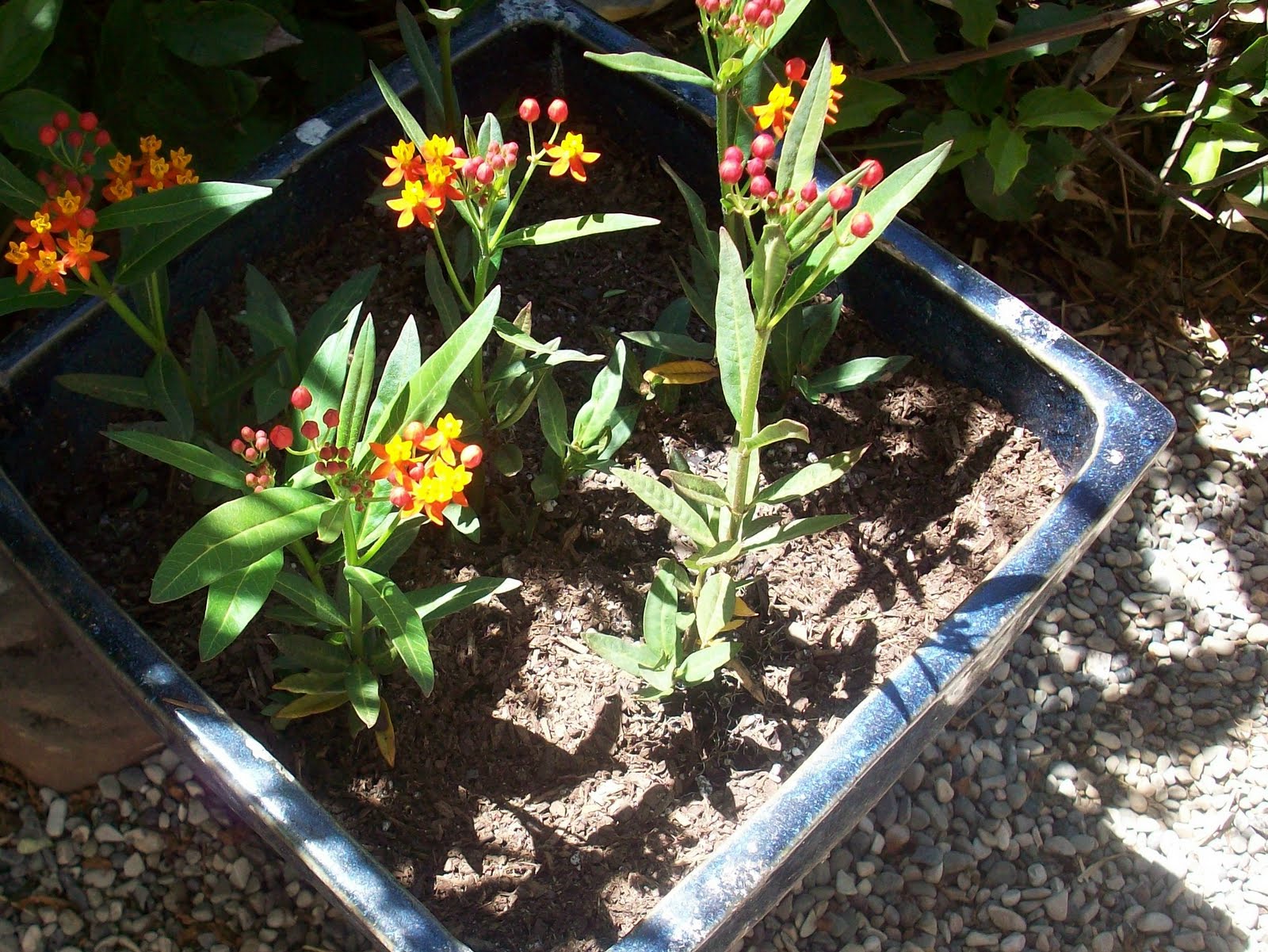
More good news. Lots of butterflies everywhere in the garden. Have the Gulf Fritillaries been gossiping about the food supplies? Added a Butterfly Bush (Asclepias curassavica 'Red Butterfly") which the
growers aver is the delight of Monarchs. And there are Monarchs! Still no  Swallowtails  in spite of Fennel growing in the garden. Apparently, (conservative creatures!) fennel is not a substitute for wild anise.

The Spiral Cactus ( he refuses to be photographed, not ready for his close-up) is actually looking better. Shade cloth seems to be working.

Sunday, August 15, 2010

Echeveria Domingo, Echeveria Subrigida Fire and Ice , Agapanthus Winterdwarf and updates on aloe polyphylla and sempervivums

Echeveria Domingo
Here is a spectacular new succulent in the nurseries now. The  photo doesn't  quite capture how frosty it looks in the flesh-- almost as pale as  the very demanding Dudleyeas. This one is about 12" across.

Echeveria Subrigida 'Fire and Ice'
Here's Fire and Ice --- it can grow to twice this size . This one is about 15". Both these hybrids were grown by Native Sons ( nativeson.com/plants.htm) whose website is an education in itself. Anything you see on the site it can be ordered through a local nursery on the Central Coast.


Hhere is the latest blooming  hybrid  agapantha to date- Winterdwarf  (about the same size as Peter Pan) --- but with even later blooms.. Anything to extend the agapantha season!. Not only is Winterdwarf  beautiful, unthirsty, easy care (to no care) but the butterflies love it. Sulphurs, White and Skippers are feeding on it now.

Update on sempervivums. Don't be fooled into thinking these guys  are as undemanding in our climate as most succulents. Though used in roof gardens all over N. Europe, in So Cal they need at least weekly water, otherwise they start reproducing and dying off.

Update on aloe polyphlla (Orb Cactus, Spiral Cactus,).This aloe takes the cake for temperamental. I've seen it grown to 14" across in the nurseries, and from the looks of the leaves they are growing it under shade cloth??......but caring for it  at home is  a real challenge.  Let it dry out completely between waterings, don't water the crown, and keep your fingers crossed.After a year, mine is alive but sulky. Haven't tried it yet under shade cloth. Just moved it.Spiral Aloes can spiral either left or right. The maddened collector naturally needs both.

 This site has beautiful Spiral Aloes  http://www.ecotree.net/contact.php  with great photographs. I'd be in heaven if I could get my waif to look like these  pictures! The site also suggests watering aloe polypylla  about as  much as you would a cymbidium  then gives authoritative directions for the potting mix. Might try re-potting  with orchid bark in the mix. Stay tuned.


Sunday, August 8, 2010

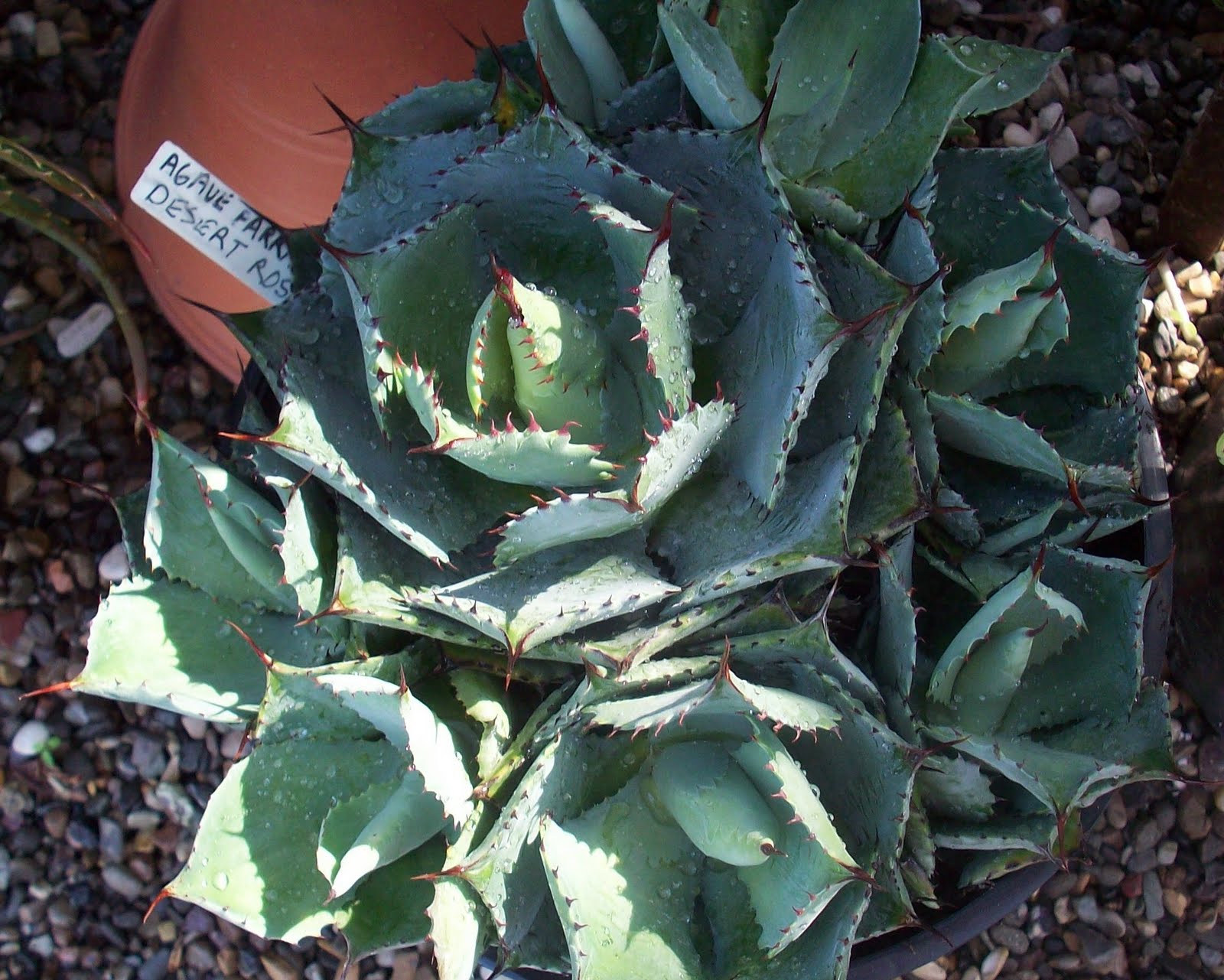
Confederate Rose Unmasked--- at Last, and a Splendid New Agave

Agave parrasana (Desert Rose)
Agave parryii truncata
My Confederate Rose
Which twin has the Toni  ?  Still a mystery......                         

By the way, I must recommend a knock-out  mystery story to any who-dun- it fans.....it's called  Special Topics In Calamity Physics by Marisha Pessl    ( http://www.calamityphysics.com/main.htm)
One of the better things about a succulent garden is you have time to read mystery stories.
 This one is a winner--if you liked Holden Caulfield of  The Catcher in the Rye  you'll appreciate Blue Van Meer. The mystery itself is so well plotted , found myself going back and checking all the clues to be sure Pessl was playing fair.

Back to the mystery agave Confederate Rose. It really  is Agave parrasana Desert Rose, and you can find it at Terra Sol Nursery along with Tony the Agave Man who solved the mystery. He doesn't quite approve of the name Confederate Rose "I'm not sure it's a real name...." Probably isn't, but it does have an intriguing connotation Desert Rose lacks. (Why is it a Confederate Rose ? Were Southern girls prickly, or great survivors, or extremely fertile? )  Lacking Tony, you might be able to ID the agave by comparing the leaves very carefully. Truncata has some very fine stripes in its' leaves.

We've mentioned boutique agaves  (Debora Lee Baldwin's  term)  last January  and here's one that is resplendent---:  Agave lophantha v. Splendida . It's leaves are shiny, as though lacquered, it glows. Grows  grows 1' x 1.5', just right for a knock-out pot  (which this isn't). This  4" plastic pot  will not be it's home. Time to consult  Debra Lee Baldwin  in her book on Container Gardens, for the Perfect Pot..

Sunday, August 1, 2010

An extraordinary garden in Ojai and a recipe for Passion Fruit Mousse

SUCCULENT GARDEN IN OJAI- This is one of the more remarkable gardens around.The whole garden is about an acre, covered with live oaks, on the edge of a ravine. The gardener has managed to blend an astonishing array of plants (roses, Peruvian lilies, poppies, day lilies on one side of a path (in the sun) culminating in this triangular succulent garden under an oak, in semi-shade. (One reason the succulents look so lush is the shade).The top of the triangle is the wall of the house containing two doors.
The succulents are combined with a lavish hand.
The bright green is E. agavoides, the furry one bottom right is E. v. Doris Taylor.(Woolly Rose)

In this bit of the garden,:far left is Pachphylum amethystinum
Next is e. nodulosa , a beautiful and subtle echeveria whose coloring doesn't show up well in the group photo, (taken in the late afternoon.) In the close-up you can see its fine fuchsia lines like painted china.
 By the way, echeverias are named for an 18th c.. botanist Atanasio Echeverría y Godoy who set out with two other naturalist to catalogue all the flora and fauna of Mexico. This worthwhile endeavor was subverted by Europe's endless wars during the period.

 The  big blue rosettes are E. sp of Hens and Chicks and are hard to beat for dramatic display. Prolific and un-fussy. To the right is e. nodula also called Painted Echveria.   Hens & Chicks turn up in different colors  throught the design.                                                                                   
Echeveria sp.


To the top left of this arrangement is E. agavoides v. Maria (photo from San Marcos Growers)


Presiding over this exuberant  succulent garden is a terra cotta statue of the benevolent Hindu deity, Ganesha, the guardian of thresholds and remover of obstacles.

Ganesha

Assuming you are going to race out to get your passion flower vine so you can have lovely orange butterflies( Gulf Fritillaries) as we suggested last week, an added bonus is ---you can  eat the fruit of the passion flower as long as you are careful to buy passiflora incarnata (and the butterflies will like it fine) --- or maracujá (P. edulis) , the fruit of  which you can buy  at the grocery store in SoCal. The blossoms are quite similar, and butterflies like both vines.
                                                 maracujá (P. edulis)
                                                                                                    
                                                             p. incarnita

This recipe looks like something dramatic to do with the fruit (which the vines produce prolifically in our climate.)

Café Brasil's passion fruit mousse (Mousse de Maracuja) L.A Times 7/22/10 - copyright LA Times (means you can't put it in a cookbook and sell the book.)  Total time: 25 minutes, plus chilling time.Servings: 6
Note: Adapted from Café Brasil in Los Angeles. Superfine sugar is also referred to as baker's sugar and can be found at well-stocked markets and cooking and baking supply stores. Fresh passion fruit might sometimes be hard to find due to seasonality and related availability; unsweetened passion fruit concentrate is a great substitute. Unsweetened passion fruit concentrate can be found at select cooking and Brazilian markets, as well as at well-stocked Latin sections in select supermarkets. It is also available online.
1/2 cup strained fresh passion fruit juice, from about 14 passion fruits or 1/2 cup unsweetened concentrate, divided
1/2 envelope unflavored gelatin powder, about 1 1/8 teaspoons
1/2 cup plus 2 tablespoons evaporated milk
1/2 cup superfine sugar, divided
4 egg whites
Pinch of salt
Fresh passion fruit seeds, for garnish, optional

1. If using fresh fruit, halve the fruit and strain the pulp through a fine sieve, rubbing to remove the pulp from the seeds. Wash the seeds in water, then dry on a paper towel. They will be used to garnish the mousse.
2. Place 2 tablespoons purée or juice concentrate in a small, nonreactive heavy-bottom saucepan and sprinkle over the gelatin to moisten. Heat the mixture over medium-low heat, stirring, just until the gelatin is dissolved and no lumps remain. Remove from heat and place the mixture in a medium bowl.

3. Add the remaining juice to the bowl and stir to combine. Add the evaporated milk and one-fourth cup sugar and stir until dissolved. Place the mixture over an ice bath and stir until chilled and slightly thickened. Remove from the ice bath.

4. In a medium bowl, beat the egg whites and salt to soft peaks. With the mixer running, gradually add the remaining one-fourth cup sugar and beat until the meringue is stiff and glossy.

5. Add a large spoonful of the egg white mixture to the chilled passion fruit mixture and gently stir until thoroughly combined. Fold in the remaining meringue, one-third at a time, careful not to over-mix.

6. Spoon the mousse into individual margarita or stemmed glasses and chill. Sprinkle with the optional reserved passion fruit seeds before serving.
Bon Appe'tit!